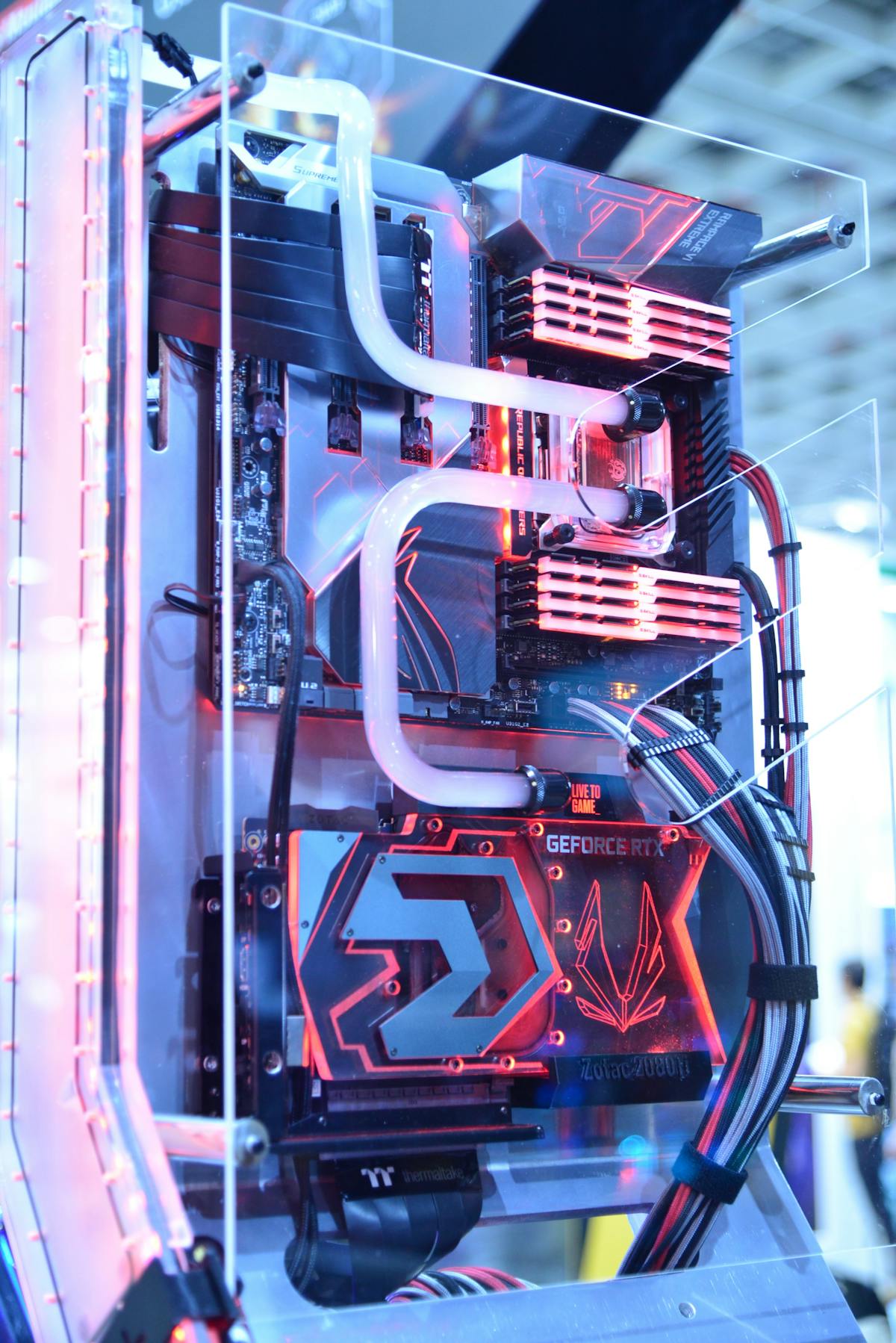
The State of PC Building in 2026: Component Trends and Buying Guide
Building your own PC has never been more rewarding or more complex than it is in 2026. The year offers an extraordinary range of components spanning multiple generations of rapidly advancing technology, with choices that can be overwhelming even for experienced builders who have been in the hobby for years. From the ongoing fierce competition between AMD and Intel in the CPU space to the three-way GPU battle analyzed elsewhere in this issue, every single component category offers compelling options at multiple price points with different tradeoffs. This comprehensive guide cuts through the complexity to help you make informed decisions about your next PC build, whether you are targeting a budget gaming rig under $800, a high-performance workstation for content creation, or a no-compromise enthusiast system with the best components money can buy.
The PC building landscape in 2026 reflects several significant industry trends that builders need to understand before making purchasing decisions. DDR5 memory has fully matured as a technology, offering high speeds and reasonable prices that have come down significantly from early adopter premiums. PCIe 5.0 has become standard on new platforms from both AMD and Intel, providing massive bandwidth for high-speed storage and future graphics cards. The ATX 3.0 power supply standard has been widely adopted across the industry, bringing improved efficiency, better transient response, and new connector standards for high-power GPUs. And perhaps most significantly, the cost of high-performance components has shifted in complex ways, with some categories becoming more affordable while others have escalated dramatically due to demand and manufacturing complexity.
Before diving into specific component recommendations, it is worth noting a fundamental principle of PC building in 2026 that applies regardless of budget: balance matters more than any single component choice. Pairing a flagship $800 CPU with a mid-range $300 GPU will produce unbalanced results with the CPU waiting on the GPU. Similarly, skimping on the power supply quality while investing heavily in other components is a recipe for instability and potential hardware damage. The best builds thoughtfully allocate the total budget proportionally, matching component tiers to ensure that no single part becomes a consistent bottleneck for the system’s intended use case.
Best CPUs for Different Budgets
The CPU market in 2026 is defined by fierce competition between AMD and Intel, with each company taking distinct approaches to architecture, core counts, platform features, and pricing. The result is a market with truly excellent options at every price point from budget to enthusiast, making this a great time to build a new PC.
AMD’s Ryzen 9 9950X3D represents the absolute pinnacle of consumer CPU performance in 2026, particularly for gaming workloads. Built on the advanced Zen 5 architecture and fabricated on TSMC’s 4nm process, the chip features 16 cores and 32 threads with a massive 144MB of innovative 3D V-Cache technology stacked vertically on the chip. This additional cache provides extraordinary gaming performance, particularly in simulation and strategy titles that benefit from large, fast memory pools. In gaming benchmarks, the 9950X3D leads Intel’s fastest offerings by a margin of 5 to 15 percent depending on the specific title and resolution. For demanding productivity workloads, the chip is equally impressive, offering competitive multi-threaded performance and excellent power efficiency that keeps thermals manageable even under sustained all-core loads.
Intel’s response is the Core Ultra 9 285K, based on the radically redesigned Arrow Lake architecture. This chip represents a significant departure from previous Intel designs, featuring a modular chiplet architecture with separate compute, graphics, and I/O tiles connected by an advanced interconnect. The 285K offers 24 cores comprising 8 high-performance cores and 16 high-efficiency cores, with boost clocks reaching 6.0 GHz on the performance cores. While it does not quite match the 9950X3D’s best gaming performance, it offers competitive multi-threaded performance and Intel’s excellent Quick Sync video encoding capabilities, which are particularly valuable for content creators who work with video regularly.
For different budget tiers, here are the current recommendations for 2026:
Enthusiast Gaming ($600+) AMD Ryzen 9 9950X3D: Unmatched gaming performance with the 3D V-Cache advantage. The best choice for pure gaming builds with no budget constraints.
High-End Productivity ($550+) Intel Core Ultra 9 285K: Excellent multi-threaded performance and Quick Sync video encoding. Best for content creation and workstation builds.
Mid-Range Gaming ($350) AMD Ryzen 7 9800X3D: Excellent gaming performance at a more accessible price point. The 8-core configuration is more than sufficient for current games.
Mid-Range Value ($300) Intel Core Ultra 7 265K: Strong all-around performance with good efficiency. A balanced choice for mixed-use builds with both gaming and productivity needs.
Budget ($200) AMD Ryzen 5 9600X or Intel Core Ultra 5 245K: Both offer excellent value for budget builds. AMD has a slight edge in gaming while Intel offers better integrated graphics.
Entry Level ($120) AMD Ryzen 5 8500G: The integrated graphics on this APU are capable of light 1080p gaming without a dedicated GPU, making it ideal for ultra-budget builds and home theater PCs.
Both AMD and Intel platforms now support DDR5 memory exclusively for their latest processor generations, and both offer PCIe 5.0 support for the fastest storage and graphics. The choice between AMD and Intel increasingly comes down to specific workload requirements and platform features rather than any fundamental performance advantage in general usage.
GPU Recommendations for Every Build
The GPU market in 2026 offers three genuinely competitive options at most price points, with each manufacturer bringing distinct strengths to different market segments. The choice of graphics card is typically the most consequential decision in any PC build, as it has the largest single impact on gaming performance and often represents the largest single expense in the entire system.
For high-end builds targeting 4K gaming at high refresh rates, Nvidia’s RTX 6090 is the undisputed performance king. The card’s DLSS 5 capabilities, combined with raw rasterization performance that exceeds anything else available on the market, make it the clear choice for those who demand and can afford the absolute best. However, its $2,499 price tag puts it out of reach for most builders and makes sense only for flagship systems. The RTX 6080 at $1,199 offers much of the same technology including DLSS 5 at a more accessible price, delivering excellent 4K performance and best-in-class ray tracing capabilities.
AMD’s RX 9900 XTX at $999 offers compelling value for high-end gaming builds, particularly for gamers who primarily prioritize traditional rasterization performance over ray tracing effects. The card matches or exceeds the RTX 6080 in traditional rendering performance while costing significantly less money. For builders who primarily play competitive shooters and other games where ray tracing is less important than raw frame rates, the AMD card offers better overall performance per dollar.
In the mid-range segment, competition is intense with excellent options from all three manufacturers. The RTX 6070 at $599, RX 9800 XT at $699, and Intel Arc B770 at $349 offer varying tradeoffs between price and performance. For 1440p gaming at high settings, any of these cards will provide excellent experiences and smooth frame rates. The Intel card is particularly compelling for budget-conscious builders, offering competitive performance at a significantly lower price point than the alternatives.
Memory, Storage, and Building Tips
Memory technology is in a transitional period in 2026. DDR5 has fully matured with speeds reaching 8000 MT/s at reasonable prices, while DDR6 is beginning to appear in early adopter platforms. For most builders, 32GB of DDR5-6000 is the sweet spot for gaming, while content creators may want 64GB. Storage has advanced dramatically with PCIe 5.0 NVMe SSDs offering sequential read speeds exceeding 14,000 MB/s. A 2TB PCIe 5.0 drive is recommended for the operating system and frequently played games, supplemented by a larger SATA SSD for bulk game storage.
Building a balanced PC requires careful consideration of how components interact. Allocate approximately 40 to 50 percent of the total build budget to the graphics card for a gaming-focused system. Invest in a high-quality power supply from a reputable manufacturer with 80 Plus Gold certification or better. Consider cooling needs carefully, as high-performance components generate substantial heat that can limit performance through thermal throttling if not adequately addressed. The PC building landscape in 2026 offers extraordinary choice and performance at every price point, making this an excellent time to build a custom system.