

GPU Wars 2026: Nvidia vs AMD vs Intel — Who Leads and Why

The graphics card market has never been more competitive, more dynamic, or more exciting for consumers than it is in 2026. Three major players Nvidia, AMD, and Intel are locked in a fierce three-way battle for supremacy that is driving rapid innovation across every market segment and delivering unprecedented performance to consumers at multiple price points. In 2026, the GPU landscape is defined by intense competition across every segment, from entry-level budget cards under $250 to thousand-dollar flagship monsters that push the boundaries of what consumer graphics hardware can achieve. Each company has staked out distinct competitive positions and strategies, and the choices available to consumers are more varied and nuanced than at any point in recent memory.
The stakes for these companies could not be higher in the current market environment. Graphics processing units have long since transcended their original purpose of rendering game graphics for entertainment. Modern GPUs are the engines of artificial intelligence, scientific computing, content creation, cryptocurrency mining, and an expanding range of professional applications. The companies that succeed in this market are not just selling gaming hardware to enthusiasts; they are selling the computational foundation of the twenty-first century economy itself. This has attracted enormous investment and produced a pace of innovation that shows no signs of slowing across any of the three competitors.
Understanding the current GPU landscape requires carefully examining each competitor’s strategy, strengths, and weaknesses. The battle is not just about raw gaming performance measured in frames per second; it encompasses ecosystem breadth, software support and stability, power efficiency, pricing strategy, and specialized capabilities for different workloads. A GPU that excels in traditional gaming might lag significantly in professional AI workloads, and vice versa. The right choice for any individual consumer depends on understanding these complex tradeoffs and matching them to their specific use cases and budget constraints.
Nvidia’s Dominance: The Blackwell Ultra Era
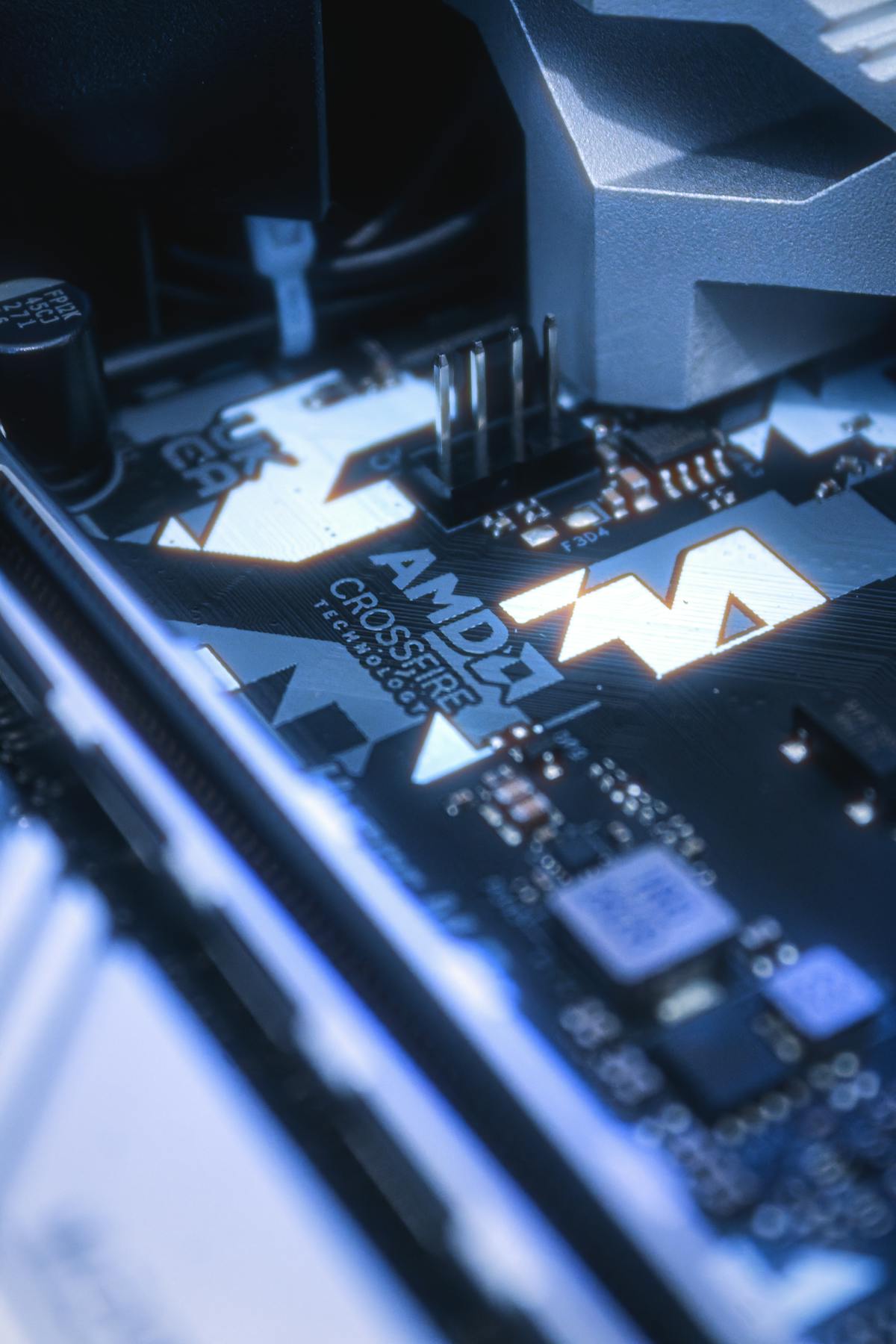
Nvidia enters 2026 as the undisputed market leader, commanding approximately 80 percent of the discrete GPU market and an even larger share of the lucrative data center GPU market. The company’s Blackwell architecture, launched to great fanfare in late 2024, has been refined with the Blackwell Ultra refresh, which brings higher clock speeds, improved memory bandwidth, and enhanced AI capabilities across the entire product stack. The flagship RTX 6090 represents the absolute pinnacle of consumer graphics performance, offering capabilities that were genuinely unthinkable just two years ago even for industry insiders.
The RTX 6090 is a truly monolithic GPU built on TSMC’s advanced 3nm process node, featuring over 30,000 CUDA cores, 96GB of blisteringly fast GDDR7 memory on a 512-bit memory bus, and fifth-generation RT cores capable of processing over 200 billion ray intersections per second. The card’s most impressive and transformative feature is DLSS 5, which uses advanced neural rendering to deliver visual quality that consistently exceeds native resolution rendering in blind testing while consuming a fraction of the traditional rendering budget and GPU power. In practical terms, this means that the RTX 6090 can run fully path-traced games at 8K resolution with smooth, playable frame rates, a feat that seemed like pure science fiction just a single hardware generation ago.
Nvidia’s strategy extends well beyond just gaming performance, however. The company’s CUDA ecosystem remains the dominant and most mature platform for GPU computing by a wide margin, with extensive support in AI training, scientific simulation, video rendering, and 3D animation applications. The RTX 6090’s AI performance is truly extraordinary, with over 200 tensor teraflops of compute power for sparse operations. This makes the card attractive not just for gamers seeking maximum performance but for professionals working with large language models, video production, 3D rendering, and scientific visualization who need serious compute capabilities on their desktop.
However, Nvidia’s market dominance has come with significant costs that have frustrated many consumers and created opportunities for competitors. Pricing has escalated dramatically with each generation, with the RTX 6090 commanding a staggering $2,499 MSRP, and actual street prices often higher due to persistent demand exceeding supply constraints. The company’s aggressive segmentation strategy, which reserves the best features and technologies for its most expensive products, has left many mid-range buyers feeling that they are receiving inferior products compared to flagship offerings. Additionally, the power requirements of Nvidia’s flagship cards have grown extreme, with the RTX 6090 drawing up to 600 watts under full load, requiring substantial power supplies and robust cooling solutions that add to the total cost of ownership.
Current product lineup highlights:
- RTX 6090: Flagship, $2,499, 96GB GDDR7, 600W TDP, designed for 8K gaming and professional workloads.
- RTX 6080: High-end, $1,199, 48GB GDDR7, 400W TDP, excellent 4K gaming and ray tracing performance.
- RTX 6070: Mid-range, $599, 24GB GDDR7, 250W TDP, strong 1440p and entry-level 4K gaming.
- RTX 6060: Mainstream, $399, 16GB GDDR7, 180W TDP, best value option for 1440p gaming.
AMD’s Competitive Response: RDNA 5
AMD has responded to Nvidia’s market dominance with its RDNA 5 architecture, which represents the company’s most aggressive push into the high-end GPU market in years. While AMD has traditionally focused on the mid-range and value segments with great success, RDNA 5 aims to challenge Nvidia across the entire product stack, including the flagship enthusiast tier where AMD has been effectively absent for several generations.
The flagship Radeon RX 9900 XTX is AMD’s most ambitious and competitive GPU in a decade or more. Built on TSMC’s advanced 3nm process, the card features 15,360 stream processors arranged in 60 Work Group Processors, 48GB of GDDR7 memory on a 384-bit bus, and AMD’s third-generation dedicated ray tracing accelerators. The card’s raw compute performance is genuinely impressive, matching or exceeding the RTX 6080 in traditional rasterization workloads while offering significantly improved ray tracing performance that narrows the gap with Nvidia substantially compared to previous AMD generations.
AMD’s key advantage remains competitive pricing that undercuts Nvidia at equivalent performance tiers. The RX 9900 XTX is priced at $999, undercutting the RTX 6080 by $200 while offering similar or better traditional rasterization performance. The RX 9800 XT, at $699, competes directly with the RTX 6070 and often beats it in raw framerates, though it falls short in ray tracing and AI workloads where Nvidia maintains advantages. At the $449 price point, the RX 9700 offers compelling value for 1440p gaming, trading blows with the RTX 6060 while offering more memory and better rasterization performance.
AMD’s software ecosystem has matured significantly since the problematic driver days of the past. FidelityFX Super Resolution 4, AMD’s answer to Nvidia’s DLSS, has improved dramatically and now offers competitive upscaling quality with broader game support through its open-source, cross-platform nature. The technology supports temporal upscaling combined with frame generation, though it still lags behind DLSS 5 in terms of ultimate image quality and performance uplift in the most demanding scenarios.
The remaining weaknesses in AMD’s offering are clear and well-documented. Ray tracing performance, while substantially improved, still trails Nvidia by roughly a generation in the most challenging scenes. AMD’s AI accelerator hardware, while capable, lacks the mature software ecosystem and optimization that Nvidia’s CUDA platform provides, making AMD GPUs less attractive for professional and AI workloads where CUDA dominance is most pronounced.
Current product lineup highlights:
- RX 9900 XTX: Flagship, $999, 48GB GDDR7, 420W TDP, competitive 4K rasterization.
- RX 9800 XT: High-end, $699, 32GB GDDR7, 320W TDP, strong 4K gaming value.
- RX 9700: Mid-range, $449, 20GB GDDR7, 220W TDP, excellent 1440p performance.
- RX 9600: Mainstream, $299, 12GB GDDR7, 150W TDP, best budget option.
Intel’s Disruptive Entry: Battlemage and Beyond
Intel’s entry into the discrete GPU market has been one of the most closely watched and analyzed developments in the hardware industry. After the somewhat rocky launch of the Alchemist architecture, which suffered from significant driver issues and inconsistent performance, Intel has returned with Battlemage, a significantly more competitive architecture that has firmly established Intel as a legitimate third player in the discrete GPU market.
The Intel Arc B770 is the flagship of the Battlemage lineup and represents Intel’s most competitive GPU to date. Built on Intel’s own 4nm process, the card features 48 Xe cores, 16GB of GDDR7 memory on a 256-bit bus, and Intel’s second-generation ray tracing units with substantially improved performance. While the B770 doesn’t compete with the flagship offerings from Nvidia and AMD in terms of raw top-end performance, it offers compelling value at its $349 price point, trading blows with the RTX 6060 and RX 9700 in traditional rasterization workloads.
Intel’s strategy is focused on the value and mid-range segments where the company can leverage its manufacturing expertise and aggressive pricing to gain market share over time. The company’s GPUs offer excellent performance per dollar, particularly in content creation workloads where Intel’s Xe Media Engine offers best-in-class video encoding quality and performance with broad codec support. The B580, at $249, has become a popular choice for budget gaming builds, offering solid 1080p and entry-level 1440p performance at prices that undercut both Nvidia and AMD equivalents.
Intel has invested heavily in its driver team and software stack, and the results show clearly in improved game compatibility and performance. The driver issues that plagued the Alchemist launch have been largely resolved through consistent updates, and game performance has improved substantially since launch through driver optimization alone. Intel’s commitment to the GPU market appears genuine, with the Celestial architecture already in development and targeting a significant generational performance increase that could make Intel competitive in higher market segments.
Challenges remain for Intel’s GPU ambitions. The company’s GPU market share is still small at around 5 percent of the discrete market, and building brand trust and mindshare among gamers takes years. Game optimization and driver support, while much improved, still occasionally fall short of the mature ecosystems of established competitors.
The AI Computing Battle
While consumer GPUs get most of the media attention, the real battleground for GPU supremacy in 2026 is the data center. The explosive growth of generative AI has created insatiable demand for GPU compute power, and both Nvidia and AMD are competing fiercely for this highly lucrative and rapidly expanding market. Nvidia’s H200 NVL and AMD’s MI350X PCIe represent the competing visions for AI computing infrastructure.
The data center GPU market is projected to grow to over $100 billion annually by 2028, and both companies are investing heavily to capture this unprecedented opportunity. The competition in this space is driving rapid innovation in memory technology, interconnect speeds, and compute architecture. The GPU wars are delivering exactly what competition promises: better products, faster innovation, and more choices for the entire industry.
